OUR CITRUS TREES
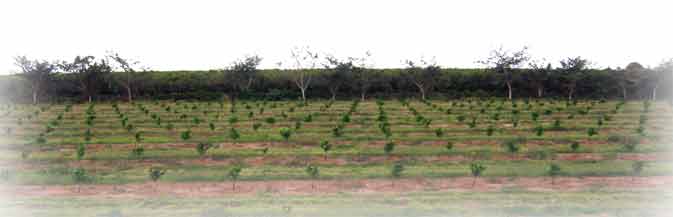
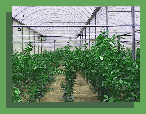
Our objective is to produce citrus nursery trees free of diseases and with perfect root and aerial systems. The major concerns are Amarelinho or CVC (Citrus Variegated Chlorosis) and Greening or Huang Long Bing (HLB), and the fact that plants grown in containers inside greenhouses can develop defective root and aerial systems. We developed several techniques and adopted others while achieving most of our goals.
|
CLASS "A" CITRUS TREES Basic requirements of CLASS "A" CITRUS TREES are:
Where You Save $
Where You Gain $$$
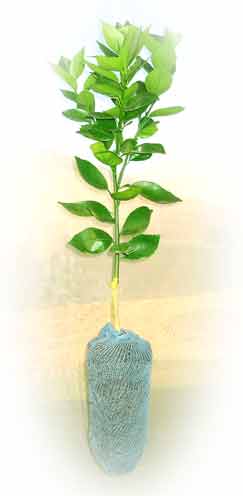
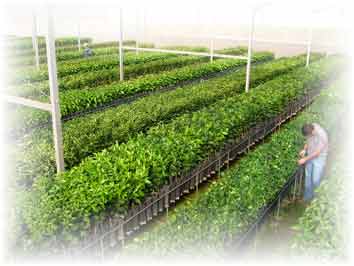
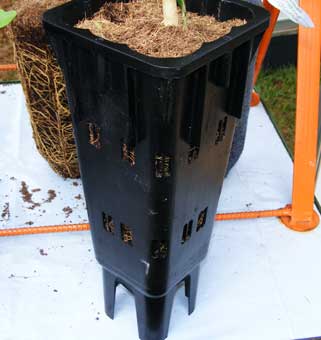
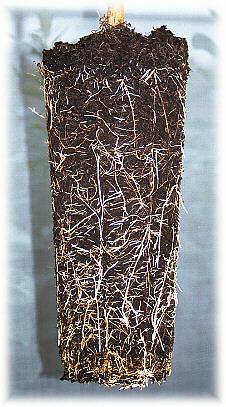
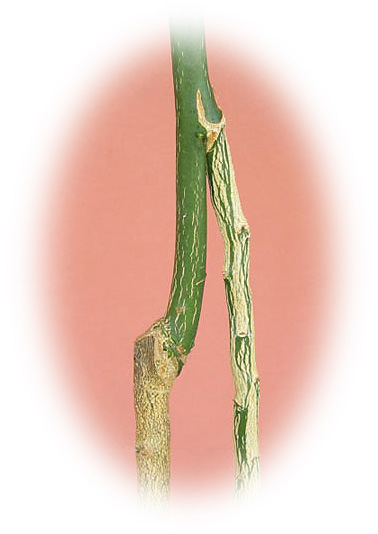
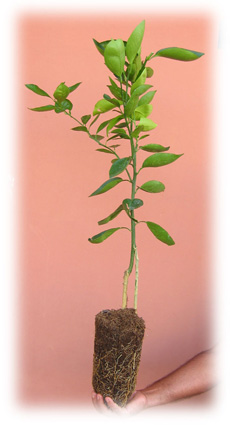
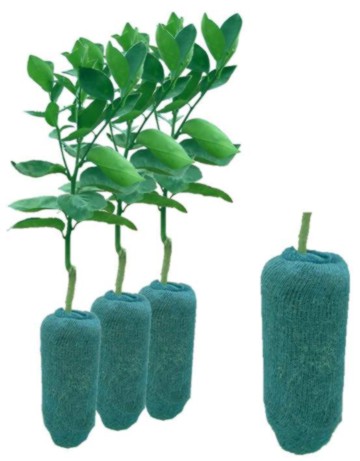
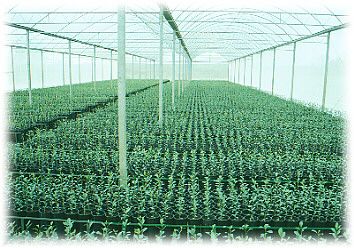
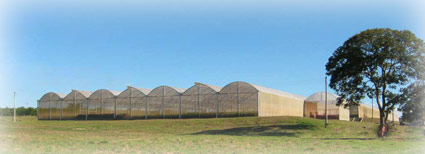
Screened Houses. Trees are produced under aphid-proof screen houses, which prevent contact with vectors of serious diseases like CVC and Greening. 100% concrete floors. Concrete floors are easier to clean and prevent important soil-born diseases like foot and root rot, and nematodes. Rigid plastic containers. Professional containers with internal ridges, lateral windows and open bottoms which prevent main root curling and lateral root spiraling are utilized. The root system develops naturally in the containers and after planting in the field giving the plants maximum support, vigor, drought resistance, and longevity. Coconut fiber as growing medium. Our trees are produced in 100% pure coconut fiber. The advantages are soil-born disease prevention and excellent root system development. In addition, coconut fiber has excellent water affinity and elevated water and nutrient retention. Therefore, watering and feeding the trees in storage or after planting are facilitated. Coconut-fiber medium is very light, making handling, shipping, and planting simple and economical. Trees with canopies. Our trees are at least 12 months old and are produced with 3 or more selected scaffold branches.. The main advantages are the savings from not having to select scaffold branches after planting, and more importantly, the avoidance of unbalanced canopies resulting from only one or two scaffold braches developing or from the growth of more than one scaffold pear leaf axil. Two-rootstock trees. Most of our trees are produced with 2 rootstocks per plant. The technique is very old but gained commercial scale after the occurrence of Citrus Sudden Death in Brazil, a disease which affects or main rootstock, Rangpur lime. A second rootstock was then inarched to young citrus orchards originally budded on Ragpur lime only, and saved them from dying of the disease. In addition to longevity due to disease resistance, the use of a second rootstock can improve fruit quality, tree vigor and drought tolerance by combining the qualities of 2 rootstocks like Rangpur lime and Swingle citrumelo, for example. We now graft the second rootstock during the nursery phase of the plant when the operation is simpler and less expensive.
Biodegradable
wrap.
Our trees are delivered with the root balls wrapped on
biodegradable wraps. The wraps do not need to be removed for planting. The
major advantages are simpler and economical planting and prevention of root
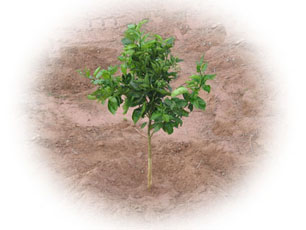
bending during the operation. Trees ready for planting. CITROLIMA trees are delivered ready for planting. It is not necessary to cut the bottom of the root ball because there is no curling of the main root, nor to remove the wrap which is biodegradable. As a result, it is not necessary to apply foot rot fungicides after planting. In addition, our trees already have selected scaffold branches and no pruning or thinning are required. |
||||||||||||||||||||||||||||||||||||
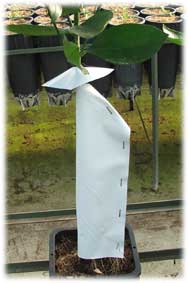 |
Trunk protectors We ship trunk protectors along with our trees. The protectors should be placed on the trees soon after planting. They are made of opaque plastic and are of easy application utilizing a regular stapler. The advantages are the reduction in sprouting from both rootstocks and the protection of the trunk against herbicides, fertilizers, small rodents and ants. |
| SEEDS. We have our own Mother-Tree block for the production of rootstock seeds, certified by the Agriculture Secretariat, guaranteeing their genetical and phytosanitary quality. The block has over 1200 trees of all commercial citrus rootstocks. Seeds are heat treated and have their seedcoats removed in order to prevent contamination with the Foot Rot fungus and other diseases, to obtain faster and more uniform germination, and to avoid bent or crooked roots. |
|
|
|
|
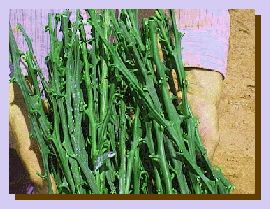
BUDWOOD. The best plants from the official budwood service of the Agricutural Secretariat are utilized. Budwood is selected, analyzed, thermically treated and budded without the wood in order to insure freedom from Citrus Variegated Chlorosis. Our budwood houses are certified by the Agricultural Secretariat. |
|
|
|